
See the whole operation.
Follow a decision through it.
Open the Jaxon command field. Explore the executive desks, trace the handoff and see the human decision gate. This is an interactive concept with illustrative states, not connected client data.
Open the Jaxon command field ↗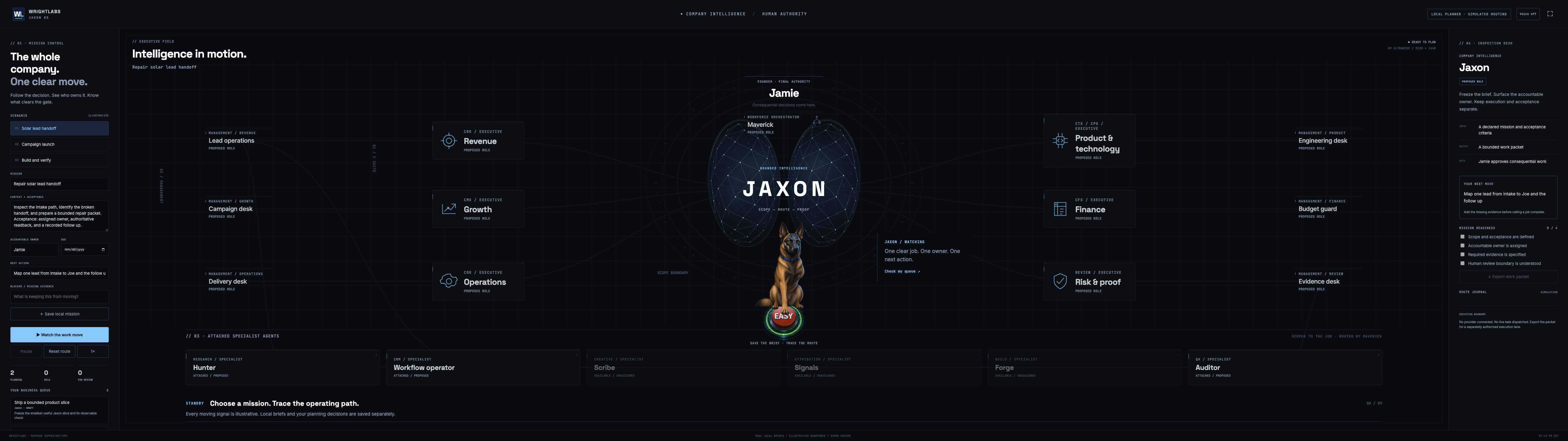
Your GHL operation.
Your command surface.
Every team action and system action ends with a scheduled next action. The record holds who owns it, what happens next, when it is due and the receipt. This local demo uses fictional records.
Every action ends with
a scheduled next action.
Team member or system: the same rule applies. Name the owner. State the next action. Set its date, time and timezone. Attach the receipt. Until those are recorded, the handoff stays unresolved. The system is the source of truth for the next move.
Unresolved handoff
Add a named owner, a specific next action, a scheduled due time and a simulated receipt.
Local demonstration only. Dates and receipts are examples. Checking this form does not schedule a task, send a message or confirm a provider action. An explicitly closed journey records its closure reason and receipt instead of creating another task.
What needs attention?
Local simulation only. No account reads, message sends or GHL writes.
Human handoffs need an owner.
The interface commands.
GHL holds the record.
A real implementation binds the command to an authenticated account and a specific contact, appointment or workflow. The backend checks permissions, performs the approved action and reads the result back from GHL.